Friday, July 16, 2010

Lilium - Lily Family


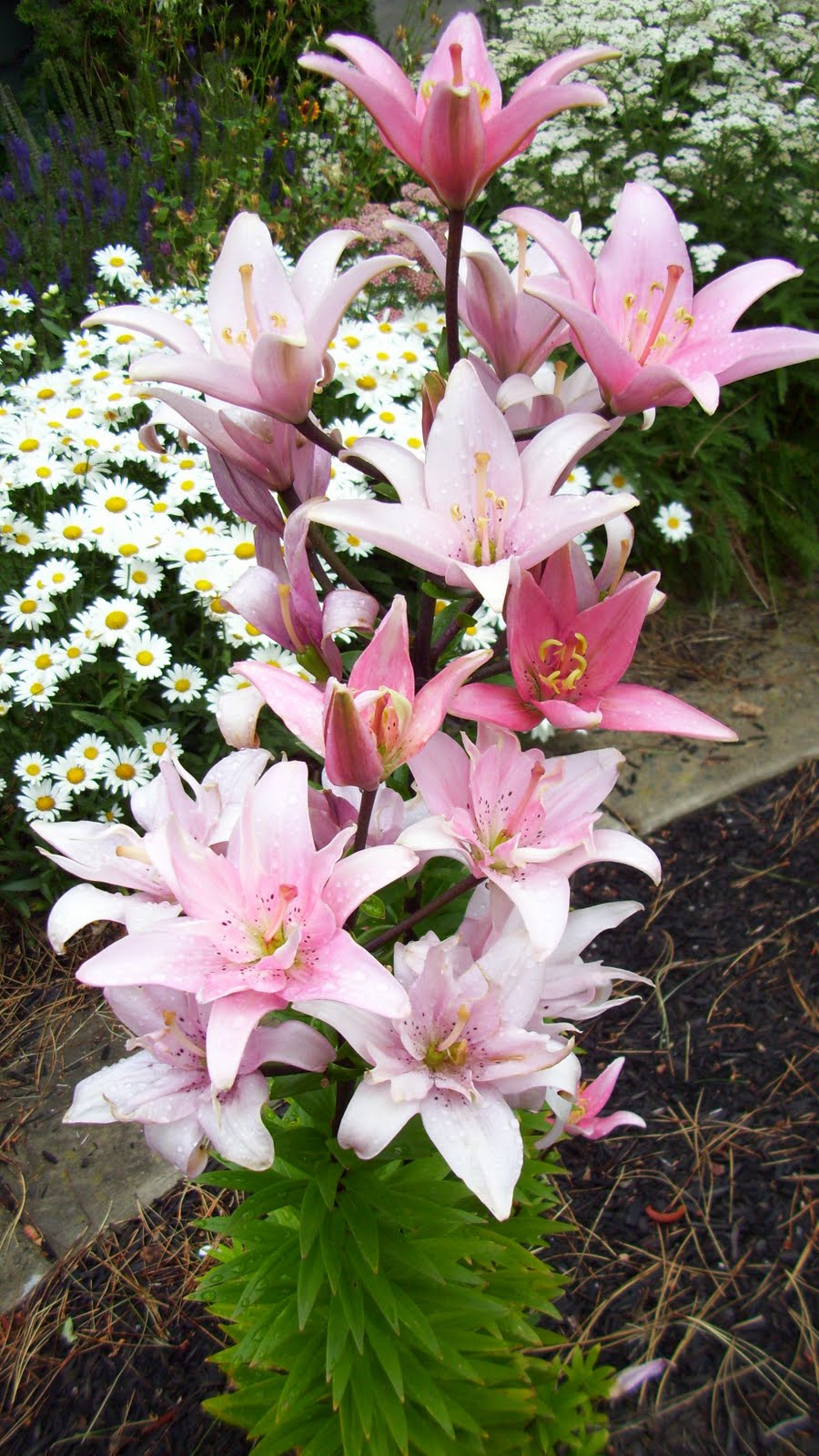
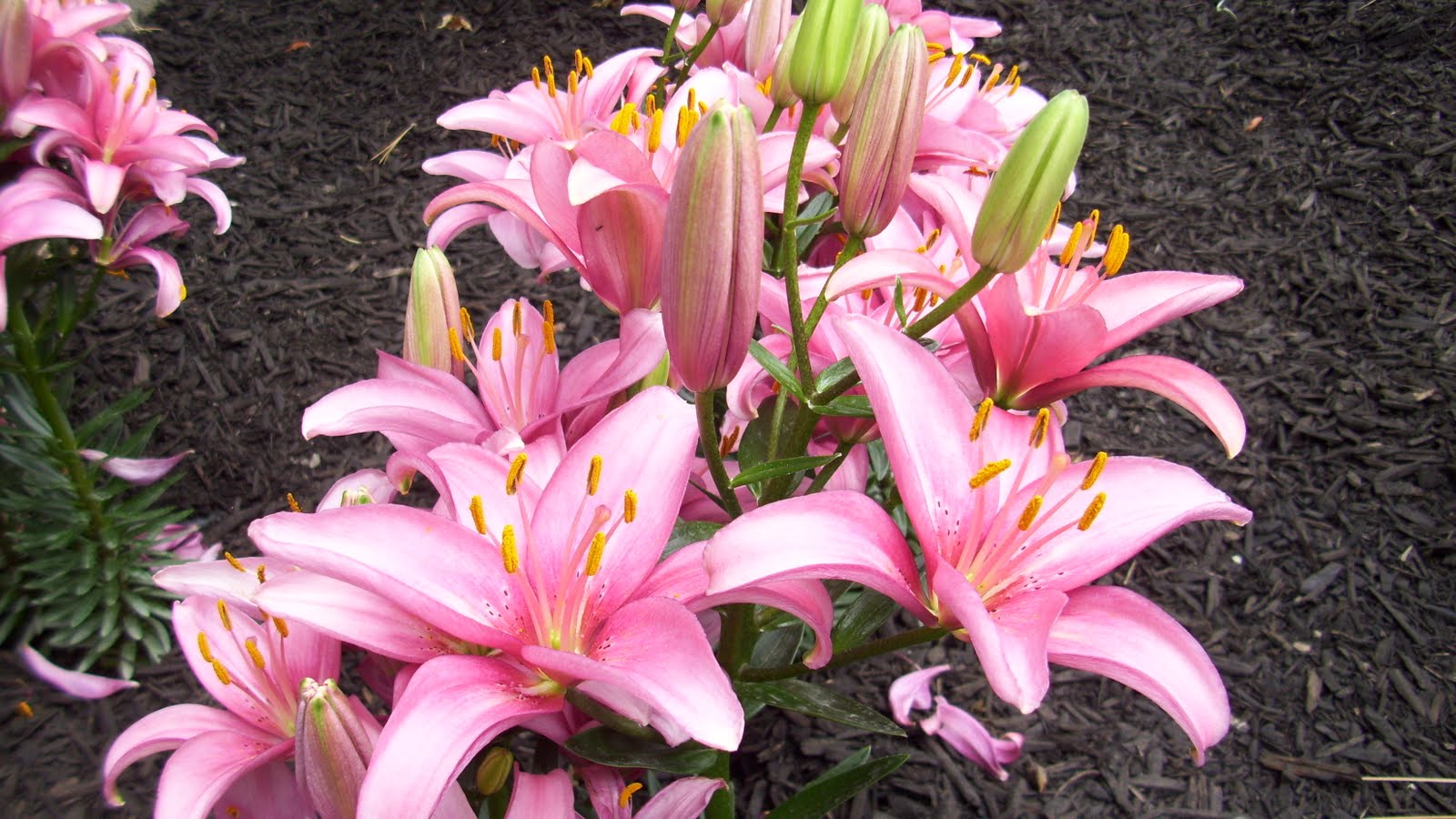
This week's Plant Of The Week is the lily family, botanical name: lilium.

Lilies are beautiful, large, showy flowering garden plants which grow from bulbs. They comprise a genus of about 110 species in the lily family (Liliaceae) and many of these species are native to the temperate northern hemisphere. The species in this genus are the true lilies. Many other plants exist with "lily" in the common English name, for example daylily, however these are often quite unrelated to the true lilies.

The large flowers, which are often highly fragrant, come in a range of colours; whites, yellows, oranges, pinks, reds and purples. The markings on the petals include spots and brush strokes. The plants are late spring or summer flowering.

As well as their importance in the garden, lilies are important culturally and in literature in many parts of the world. They can be used in herbaceous borders, woodland and shrub plantings, and as a patio plant in a container. Some species are also sometimes grown or harvested for the edible bulbs.

Our photos show some beautiful lilies we have seen recently in gardens around the Okanagan.

If you have any suggestions for our Plant Of The Week or have photos of plants in your garden which we have featured on our website and would like to share with us, we would love to hear from you. Happy gardening!

Friday, July 9, 2010

Magnolia macrophylla - Big leaf Magnolia


This week's Plant Of The Week is Magnolia macrophylla or Big leaf Magnolia.

The Big leaf Magnolia is a deciduous magnolia which is native to the southeastern United States and eastern Mexico. However, it can be grown farther north than that and these photos were taken last weekend at a garden in the Okanagan!.

Magnolia macrophylla is a medium-sized understory tree which generally reaches 15-20m tall (49 - 60'). (Understory means 'the area of a forest which grows at the lowest height level below the forest canopy'.)

This species of magnolia boasts the largest simple leaf and single flower of any native plant in North America. The leaves can reach between 25-80 cm (10-31") long and 11-30 cm (4-12") wide. Many of the tree's branches bend under the weight of the large foliage.

Cultivation - This species is often short-lived under cultivation due to its rather picky requirements. The tree likes loose, undisturbed rich soil (or mulch and compost substitutes) in full sun or part shade with plenty of moisture. It's best chances of success are in locations which closely mimic its natural habitat.

Friday, July 2, 2010

Philadelphus - Mock Orange


Our Plant Of The Week for the first week in July is the Philadelphus or Mock Orange.

Philadelphus is a deciduous, flowering shrub with bright green leaves and beautiful, small white flowers, with an orange- yellowish center. The flowers give off a wonderful citrusy (orange) fragrance which is how the plant got its common name.

There are several varieties of Philadelphus available and they range in size. Some varieties can grow quite large! There is a lovely dwarf cultivar called Philadelphus 'Snowbelle' which has fragrant double blooms. Another excellent variety is Philadelphus virginalis 'Minnesota Snowflake'.

They will do well in either full sun or part shade and in a well-drained, loamy soil. Mock oranges generally blossom more profusely if planted in full sun. They are reasonably drought tolerant once established.

The fragrance of the flowers can be a major selling point. Unfortunately, not all cultivars of mock orange are equally fragrant. Consequently, a good time to buy mock orange is when it's in bloom at the nursery - that way, you can sample the fragrance for yourself.

Friday, June 25, 2010


Our Plant OF The Week this week is a tree!

The Catalpa tree, also spelled Catawba, is native to warm temperate regions of North America, the Caribbean, and east Asia. However, we also have some lovely specimens growing here in the Okanagan valley and they are in full bloom right now.

Catalpas are mostly deciduous trees that typically grow to 12–18 metres (39–59 ft) tall and 6–12 metres (20–39 ft) wide. A 10-year-old sapling will stand about 6 metres (20 ft) tall. They can be recognized by their large heart-shaped or three-lobed leaves, showy white or yellow flowers in broad panicles, and in the autumn by their long fruits which resemble a slender bean pod, containing numerous small flat seeds. It is these seed pods which give the tree its common names - Indian Bean Tree or Cigar Tree.

Due to their large leaf size, Catalpas provide very dark shade and are a popular habitat for many birds, providing them with good shelter from rain and wind.

If you would like one of these trees in your garden, Kel-Lake Greenhouses in Winfield have a good selection at the moment. They do need a lot of room though and are not suitable for small yards!

Friday, June 18, 2010

Syringa reticulata ‘Ivory Silk’ - Ivory Silk Lilac


Our choice for Plant of the Week this week, is the Syringa reticulata ‘Ivory Silk’, common name Ivory Silk Lilac.

This is an excellent, small, upright, deciduous tree which requires little if any maintenance. It has an oval or pyramidal form when young but spreads to a more rounded and compact shape as it grows older. The huge clusters of creamy white flowers, borne in early summer for about two weeks, are the main ornamental feature but lack the fragrance of the spring-blooming Lilacs. You can see these trees in full bloom right now.

The Ivory Silk Lilac can be expected to reach a height of about 20 - 30' tall with a spread of about 16' at maturity.

Friday, June 11, 2010

Viburnum plicatum 'Mariesii' - Japanese Snowball Bush


This week's Plant Of The Week is Viburnum plicatum 'Mariesii' or Japanese Snowball Bush.

This beautiful, deciduous shrub has widely spreading branches which naturally assume a series of horizontal tiers. This layered effect is especially prominent in the variety 'Mariesii', which is even more stunning when in full bloom, as our photograph shows. The flowers, which are similar to the blooms of a lace-cap hydrangea, are arranged in two parallel rows along the upper side of the branches. The dark green leaves are deeply veined and will turn red-purple in the fall.

This shrub would make an excellent choice as a specimen plant. It would also work well in a Japanese style garden due to its distinctive horizontal growth habit.

Young plants require minimal pruning and any vertical shoots that threaten to spoil the distinctive tiered shape of established plants should be cut back to their point of origin in summer after flowering. With careful pruning, carried out by an experienced horticulturalist, the shrub can be trained to a more symmetrical shape.

Friday, June 4, 2010

Sambucus species - Elderberry


This week's choice for Plant of the Week is the Sambucus species. Known commonly as Elderberry, these large, upright shrubs are in full bloom now. The large creamy, white flat topped clusters of small flowers have a wonderful fragrance and can be used to make elderflower cordial and as a flavouring when cooking fruit such as rhubarb. Additionally, the flowers ripen into berries which are excellent for preserve or wine making and have the added benefit of attracting wildlife to the garden.